Винтажный туристический постер городов— текстовый промпт
1 / 4
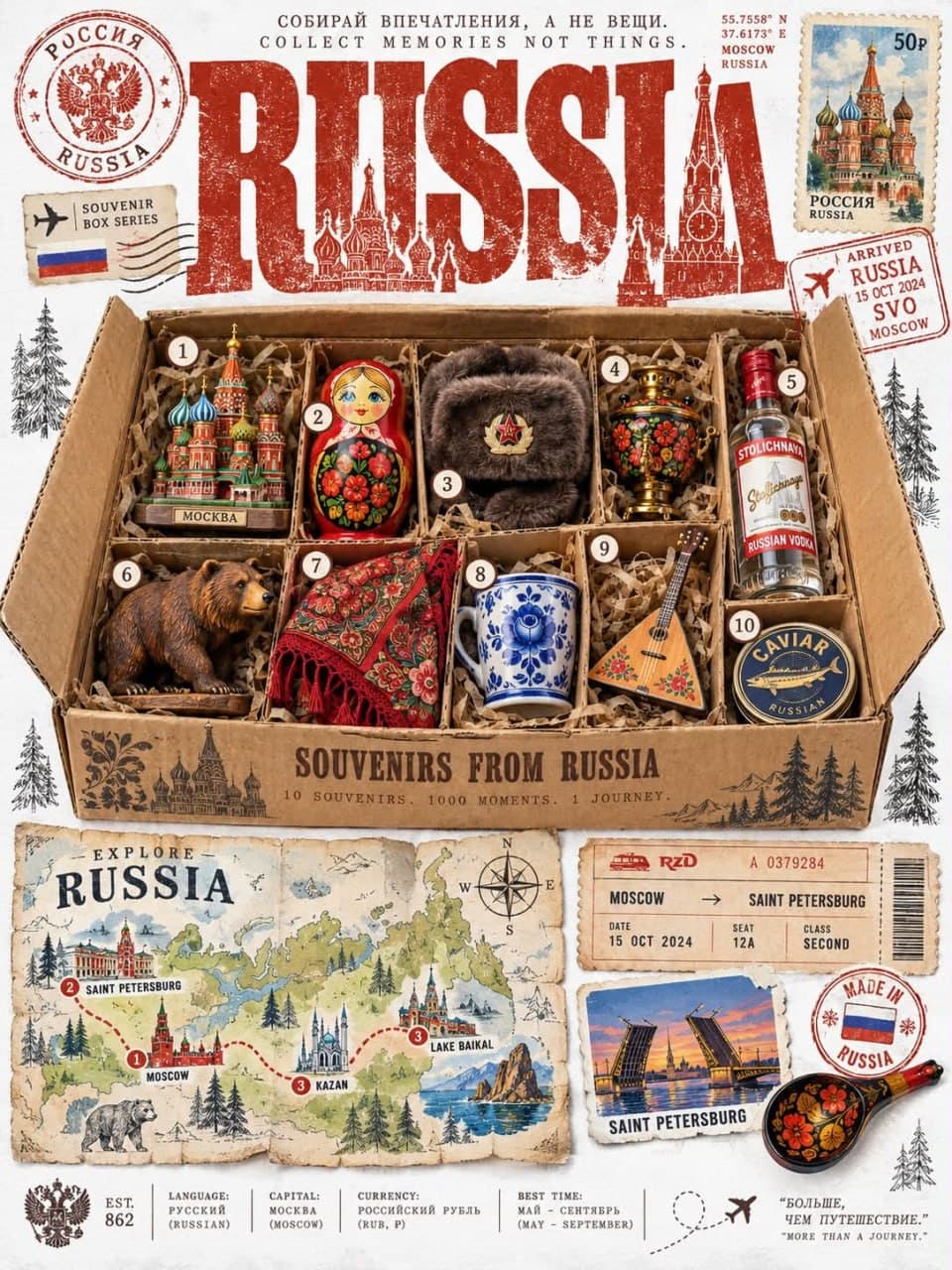
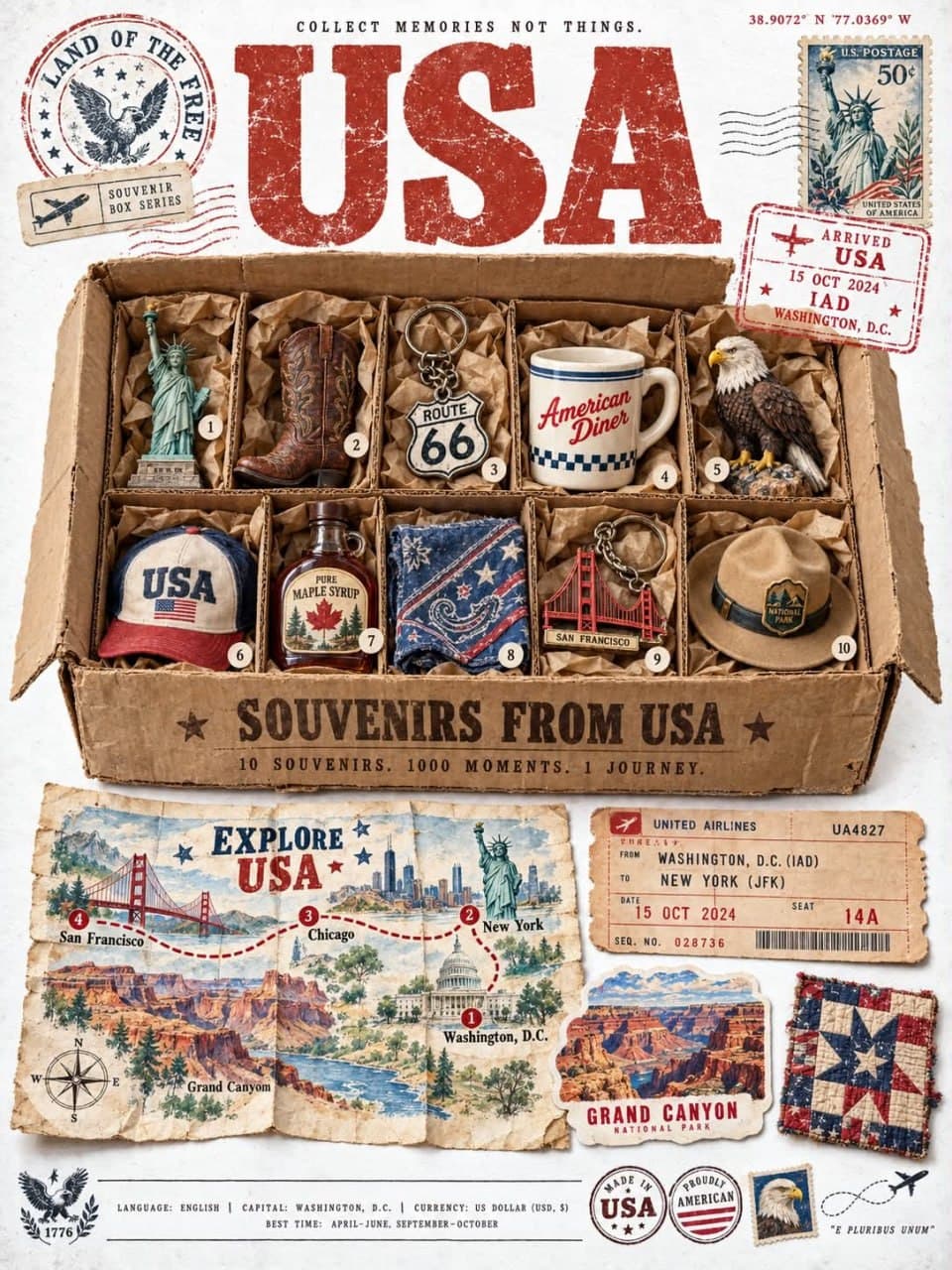
Create a vintage travel poster for {{JAPAN}} in retro travel/postal collage style with magazine-cover feel, 3:4 portrait, high resolution (at least 2048×2731). Automatically fill country-specific details from real, well-known associations with {{JAPAN}}: language, capital, currency, capital coordinates, iconic souvenirs, landmarks, national animal/symbol, signature food or drink, folk craft, ornament and flag colors.
Background: pure white () fine-art matte paper with subtle low-opacity grain, faint aged mottling and barely visible corner vignette. Keep it white—no cream, tan, yellow or sepia tint.
At the top, add the small tagline "COLLECT MEMORIES NOT THINGS." in tracked uppercase serif/typewriter, dark brown-black (). If {{JAPAN}} uses a non-Latin script, add the native translation above or beside it. Below, place the country name in huge uppercase letters across the top third: bold condensed vintage slab-serif letterpress, distressed brick red (), with cracked texture, uneven ink, rough edges and slight overlap with nearby elements.
Top corners: left—a worn circular rubber-stamp badge with the country's nickname/motto and national symbol, plus a "SOUVENIR BOX SERIES" postal tag with plane icon and wavy postmark lines. Right—a rectangular hand-painted postage stamp featuring a famous landmark framed by local foliage, denomination and postal text, plus a slightly rotated red customs stamp with dashed border reading "ARRIVED", country name, date, arrival airport code and city. Add the capital coordinates in small red serif text.
Center: an open kraft cardboard shipping box (, shadows ), flaps outward, visible corrugated edges and worn corners, viewed slightly top-down. Divide it into 8–10 irregular compartments with crinkled kraft tissue/shredded paper. Fill with 10 hyper-realistic iconic souvenirs: miniature landmark, traditional doll/figurine, lucky charm, tableware/drinkware, national-animal figurine/plush, textile or dress accessory, local food/drink bottle or jar with realistic label, fan/textile craft, keychain/trinket, and traditional hat/uniform item. Shoot like studio product photography with soft diffused light, short shadows and a warm, slightly desaturated vintage grade. Optional numbered white circle tags (1–10). On the front flap, add a bold vintage serif caption such as "SOUVENIRS FROM {{JAPAN}}" or "10 SOUVENIRS. X MOMENTS. 1 JOURNEY."
Below the box, arrange travel ephemera: a folded illustrated vintage map with creases and torn edges titled "EXPLORE {{JAPAN}}" or native equivalent, dotted route linking 3–4 numbered pins, small painted vignettes of 2–3 landmarks and a compass rose in muted blues, greens and tans; a kraft-tan train/plane ticket with perforated edge, red/black print, route from the capital to another city, same date as the arrival stamp, seat number, serial and transport icon; a die-cut travel sticker with white border showing a landmark/region and bold name; and one small folk-craft object in the bottom-right corner.
Bottom footer: left—a small badge with national emblem/animal and historic founding year. Center—small tracked uppercase serif facts in dark brown, separated by thin vertical lines: "LANGUAGE: … | CAPITAL: … | CURRENCY: … | BEST TIME: …". Right—round stamps reading "MADE IN {{JAPAN}}" or "PROUDLY [demonym]", a small postage stamp with the national animal, dashed flight path with plane, and national motto/catchphrase in quotation marks in small italic serif.
Use flag colors sparingly on stamps, badges and ribbons. All rubber stamps/postmarks should have uneven ink pressure and subtle distress. Apply fine paper grain throughout. The poster must feel like physical objects photographed on textured white paper, not flat digital graphics.
Avoid: cream/tan/yellow background tint, modern flat UI, glossy plastic or CGI look, halftone dots, flat digital drop shadows, watermarks, extra text beyond specified vintage labels, blurry or low-resolution stamp lettering) fine-art matte paper with subtle low-opacity grain, faint aged mottling and barely visible corner vignette. Keep it white—no cream, tan, yellow or sepia tint.
At the top, add the small tagline "COLLECT MEMORIES NOT THINGS." in tracked uppercase serif/typewriter, dark brown-black (). If {{JAPAN}} uses a non-Latin script, add the native translation above or beside it. Below, place the country name in huge uppercase letters across the top third: bold condensed vintage slab-serif letterpress, distressed brick red (), with cracked texture, uneven ink, rough edges and slight overlap with nearby elements.
Top corners: left—a worn circular rubber-stamp badge with the country's nickname/motto and national symbol, plus a "SOUVENIR BOX SERIES" postal tag with plane icon and wavy postmark lines. Right—a rectangular hand-painted postage stamp featuring a famous landmark framed by local foliage, denomination and postal text, plus a slightly rotated red customs stamp with dashed border reading "ARRIVED", country name, date, arrival airport code and city. Add the capital coordinates in small red serif text.
Center: an open kraft cardboard shipping box (, shadows ), flaps outward, visible corrugated edges and worn corners, viewed slightly top-down. Divide it into 8–10 irregular compartments with crinkled kraft tissue/shredded paper. Fill with 10 hyper-realistic iconic souvenirs: miniature landmark, traditional doll/figurine, lucky charm, tableware/drinkware, national-animal figurine/plush, textile or dress accessory, local food/drink bottle or jar with realistic label, fan/textile craft, keychain/trinket, and traditional hat/uniform item. Shoot like studio product photography with soft diffused light, short shadows and a warm, slightly desaturated vintage grade. Optional numbered white circle tags (1–10). On the front flap, add a bold vintage serif caption such as "SOUVENIRS FROM {{JAPAN}}" or "10 SOUVENIRS. X MOMENTS. 1 JOURNEY."
Below the box, arrange travel ephemera: a folded illustrated vintage map with creases and torn edges titled "EXPLORE {{JAPAN}}" or native equivalent, dotted route linking 3–4 numbered pins, small painted vignettes of 2–3 landmarks and a compass rose in muted blues, greens and tans; a kraft-tan train/plane ticket with perforated edge, red/black print, route from the capital to another city, same date as the arrival stamp, seat number, serial and transport icon; a die-cut travel sticker with white border showing a landmark/region and bold name; and one small folk-craft object in the bottom-right corner.
Bottom footer: left—a small badge with national emblem/animal and historic founding year. Center—small tracked uppercase serif facts in dark brown, separated by thin vertical lines: "LANGUAGE: … | CAPITAL: … | CURRENCY: … | BEST TIME: …". Right—round stamps reading "MADE IN {{JAPAN}}" or "PROUDLY [demonym]", a small postage stamp with the national animal, dashed flight path with plane, and national motto/catchphrase in quotation marks in small italic serif.
Use flag colors sparingly on stamps, badges and ribbons. All rubber stamps/postmarks should have uneven ink pressure and subtle distress. Apply fine paper grain throughout. The poster must feel like physical objects photographed on textured white paper, not flat digital graphics.
Avoid: cream/tan/yellow background tint, modern flat UI, glossy plastic or CGI look, halftone dots, flat digital drop shadows, watermarks, extra text beyond specified vintage labels, blurry or low-resolution stamp lettering




Подпишись, чтобы
ничего не пропустить
Бесплатные промпты для нейросетей на русском, новости ИИ и уроки по генерации фото, видео и текста, доступные на всех площадках.